
It might seem a stretch to think that a book about wheelwrights in 19th-century England would have anything to say about Nordic skiing in the Mad River Valley in the 21st century. Many of us probably don’t even know what a wheelwright is, let alone that anything done in the 19th century has anything to say about the 21st century. But I’ll try to draw some parallels.

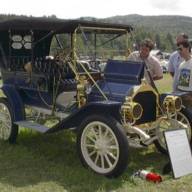
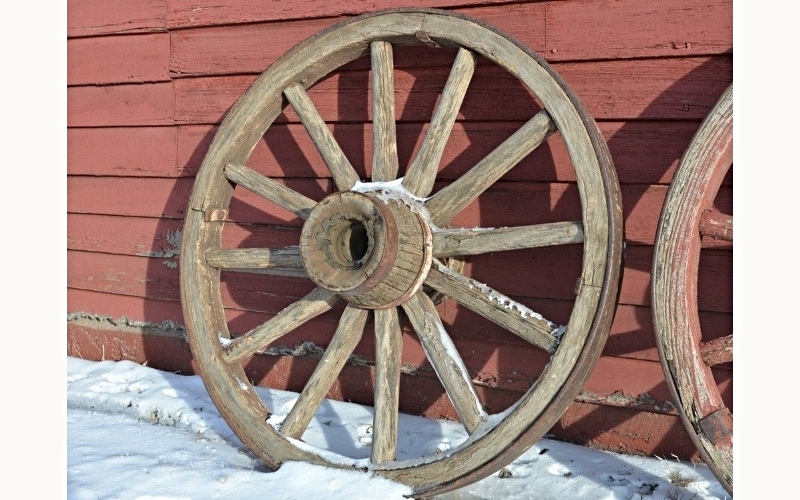
Published in 1923 by wheelwright George Sturt, “The Wheelwright’s Shop” is a wonderful personal history of a time before industrial technology came to rule the world. (By the way, a wheelwright is a person who makes and repairs wooden wheels and the vehicles they attach to. They were the auto mechanics of their day.) Back then people and goods mostly made their way from farm to town and town to town in carts and wagons and coaches made of wood and powered by animals.
Sturt and his fellow wheelwrights kept this world moving. They were intimate with wood, its growing, cutting, shaping, and joining. They consciously navigated the vagaries of change. They were true masters of their craft in a time that mastery was a meaningful pursuit. Maybe industrial technology has always been about lowering the barriers to proficiency, mastery, so that their attainment is less taxing. This means dispatching with as many of these vagaries as possible, smoothing all irregularities.
When I was in my late teens Nordic skis were made of wood. Entirely. And they required wax for both grip and glide. Now there are Nordic skis with no wood. And no need for wax. Their plastic bases are textured and provide grip and glide. No more guessing – or better said, intuiting – the best wax for the conditions. What we’ve lost in our relationship to the world – our sense of temperature and snow texture, wind, and sun angle – we’ve gained in regularity. To say nothing of convenience. Now I just toss my unprepared skis on the ground, click into my bindings, and head off down the groomed track. The experience is uniform and enjoyable, if a little numbing.
In his book, Sturt talks about the enjoyable activity of buying lumber. For the 19th century wheelwright this was much more than a commercial transaction. It entailed an exercise, a practice, of understanding the intimate relationship connecting the earth to the activities of the humans who inhabit it. What they were about and how best to help them in their pursuits. The wheelwrights of the day were exemplars of the very human activity of forming and reforming meaningful distinctions. That is, they knew in their bones how to tell things apart. Little things. The things it’s our habit to ignore. Sturt describes the different ideal uses for, say, a beech log from a tree that had been felled in the autumn versus one felled in the spring.
“Another matter the wheelwright buyer had to know about was the soil the timber grew on. Age-long tradition helped him here. I, for instance, knew from my father’s telling, and he perhaps from his father’s, that the best beech in the district came from such and such a quarter: that the very limbs from the elm in one park would yield good “stocks” (hubs for wheels); and that in a certain luxuriant valley the beautiful-looking oaks had grown too fast and when opened were too shaky to be used. Yet, I didn’t know (and paid for not knowing) that on the clay, in one hollow of Alice Holt, the oak had a nasty trick of going ‘foxy-hearted.’ I bought a small ‘parcel’ of trees there. They looked well enough too in the yard until the winter, when the sawyers began to saw them open. But then — tree after tree, sound at the butt, began about two feet up to disclose the ‘foxy’ middle, the rusty-looking pith-like rotten string or rope running far up. I don’t think my father or grandfather would have bought timber from that hollow. They knew ‘England’ in a more intimate way.” (p.26, The Wheelwright’s Shop”; George Sturt; Cambridge University Press, 1923)
When it comes to Nordic skiing the same kind of discernment is important. Sensing where the snow has been shaded from the sun is part of it. Knowing what time of the day – when in the sun’s path across the sky – sunlight might have touched the snow can make a difference. Snow that gets sun in the morning affords a different experience than snow that suns in the afternoon. Picking up on these little things can make a difference. With attention turned to the feel of the ski across the snow – picking up on the subtle differences one stride to the next – small adjustments are made. Often without even thinking about it. That focus – the whole shebang of it – yields a richer experience, a more intimate encounter with the world. After all, it’s every last part of the body performing the dance; nothing was left in the car, parked in the lot.
I’m afraid we’ve forsaken some of this capacity for discernment in favor of uniformity. As if the body’s ability to register the miniscule is of little interest, value, to us. Our heads tell us it would be so much easier if everything was the same. If every kick, every glide were the same. But balance is a skill to be practiced, not an entitlement to be expected. Sure, it frustrates me the way the trails are whale backed – especially in the woods where the snow depth hasn’t quite yet leveled them – and my balance is tested with every stride, my skis sliding it seems as much laterally as forward. And I could wish the deer didn’t do whatever they do in the night that warms the snow that then refreezes into slick patches when they move on, and inevitably right in the spot where I really want to kick. But I’m learning where these spots are on my favorite trails, and how these spots are a subtle shade of gray not the white of the surrounding snow, which is like knowing that a tree that grew in a hollow and felled in the spring won’t offer up the kind of wood any good at all for wooden wheel hubs.
You might also like