
“We need to have your back.”
That was the message from Waitsfield Select Board chair Brian Shupe after the board, acting as the town’s board of health, held a public hearing on conditions at the Verdmont Mobile Home park this week.

At the April 13 meeting, which was attended by residents of the park, many of whom had also submitted letters and pictures to the board, the select board heard a broad array of complaints about park management, specifically regarding water and wastewater.
That property is owned by and managed by Downstreet Housing.
Over the course of the evening, residents described what they said were worsening public health and safety issues tied to water, wastewater, and basic site conditions. The board discussed whether those concerns rise to the level of a formal public health emergency—and what steps the town may need to take if conditions do not improve quickly.
FAILING SEPTIC
Much of the testimony centered on failing septic and wastewater systems. Residents described repeated backups into their homes, frozen pipes, and what they believe are damaged or poorly installed lines following a recent water infrastructure project.
One resident, detailed a winter incident in which a main sewer line froze for the first time in decades. After days of trying to clear the issue himself, he said a contractor ultimately found a freeze deep in the system. He suggested the problem may be linked to recent excavation work tied to new water lines.
Another resident recounted multiple episodes of sewage backing up into her home. After hiring a contractor to investigate, she said a camera inspection revealed roots in the line, and later, a cracked pipe that crews could not fully access. As water was introduced into the system, she described a growing hole forming above the line—evidence, she believed, of a significant failure underground.
LEACH FIELD
Town health officer and select board member Fred Messer pointed to longer-term concerns. The leach field, he said, has shown signs of persistent saturation for years, particularly on its western side. In spring conditions, he noted, it can be difficult to distinguish between stormwater and wastewater—but the result, he suggested, is the same: a consistently wet and potentially hazardous area.
Residents and officials also referenced photos and firsthand observations of standing water that appeared consistent with wastewater surfacing—an issue that, if confirmed, could constitute a direct public health risk.
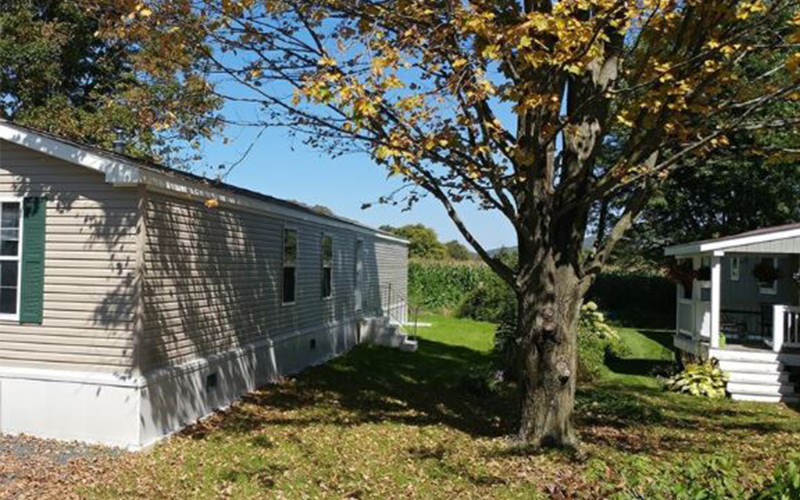
Compounding those concerns are widespread site conditions following the installation of new water lines. Tenants described trenches left unfilled, poor grading, and yards that have turned into mud fields. Standing water, they said, has become common, raising concerns about mosquitoes and unsafe footing.
“Pooling water is a breeding ground,” one resident said, describing conditions that have made outdoor spaces difficult to use and maintain.
PART OF THE SOLUTION
Questions also arose about the water system itself—specifically, where the town’s responsibility ends, and the park owner’s begins. The board discussed how municipal water service extends only to a master meter at the park entrance. From that point on, the internal system is owned and maintained by the property manager, Downstreet Housing.
Local water commission members noted concerns about how those internal lines were installed, including issues with access to meter pits and the possibility that older infrastructure remains in place. While the town is responsible for delivering clean water to the meter, board members emphasized that they still see themselves as part of the solution if problems arise beyond that point.
Beyond infrastructure, residents described broader sanitation and management issues: overflowing dumpsters that are difficult to access, trash blowing into nearby fields and waterways, dog waste accumulating in common areas, and compost piles attracting wildlife. Mailboxes, some said, are broken or unsecured, exposing mail to weather and pests.
UNANSWERED CALLS
Underlying nearly all the testimony was frustration with property management. Residents said calls and emails often go unanswered, issues persist for months or years, and communication from Downstreet has been inconsistent, particularly during staff turnover.
The board discussed how these concerns intersect with state housing and health regulations, including Vermont’s Rental Housing Health and Safety Code. While enforcement authority largely rests with the state, the town retains the ability—through its Board of Health—to act when conditions pose a threat to public health.
In response to the hearing, board members outlined a clear, if measured, path forward.
They plan to formally communicate with Downstreet, emphasizing the seriousness of the situation and requesting a detailed timeline for addressing the issues raised. The board also intends to closely monitor the company’s promised actions, which include site repairs, improved communication with tenants, and a broader cleanup effort.
STRONGER ACTION
At the same time, officials made clear that stronger action remains on the table. If conditions do not improve, the board discussed reconvening as the Board of Health and potentially issuing a formal health order—an enforcement step that could require specific corrective measures.
Residents were encouraged to continue documenting problems and sharing updates with the town in the coming weeks, helping to build a clear public record.
Throughout the hearing, Shupe and other board members emphasized that the process is just beginning—but that the town is committed to staying engaged.