

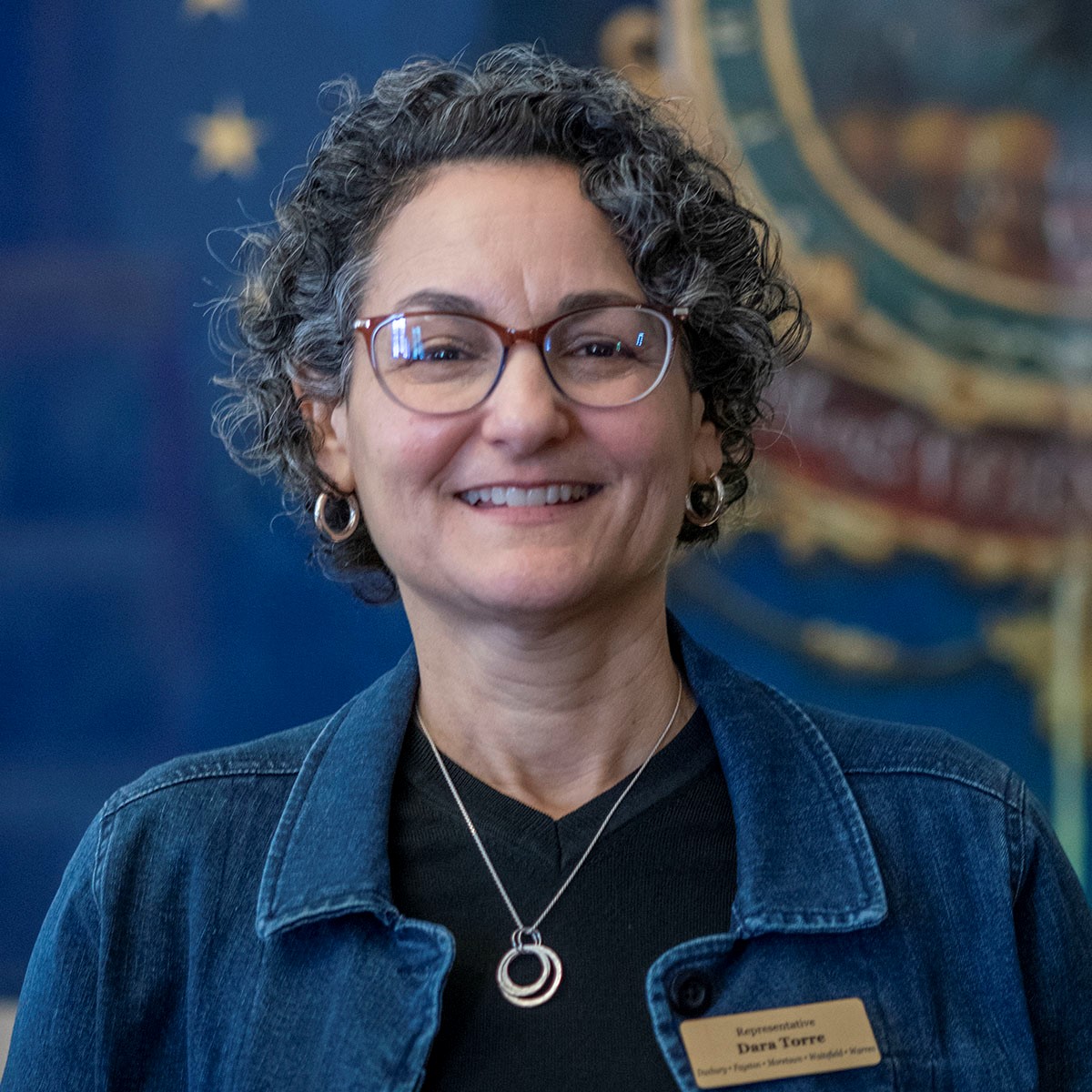
With Town Meeting and the legislative break behind us, legislative committees are back at work finishing up testimony and voting on priority bills to meet crossover deadlines this week and next. The House Education Committee, however, will get an exception from the crossover deadline to complete its work on next steps for last year’s Act 73 education transformation before passing it on to the Ways & Means Committee.

Some bills on the move:
H.67 represents a collaborative effort between the legislature, the administration, and the state auditor’s office to create a panel of legislators to work in conjunction with committee chairs to regularly review the progress and effectiveness of laws passed. The evaluation tools and scope of oversight will be determined by the members of the committee and will be set up as a two-year pilot. This is an important step to check that legislative intent and funding is being followed and implemented as originally intended.
A bill regarding Emergency Management and Disaster Relief strengthens Vermont’s disaster relief and emergency management by creating a microgrant fund for fire departments, urban search and rescue, and emergency medical services to provide ongoing training and specialty equipment. This fund will be especially important this year as Vermont manages the aftermath of the floods in the Northeast Kingdom, which were recently denied FEMA assistance. Vermont experts from the Communications working group, Enhanced 9-1-1, fire wardens, the Vermont Department of Public Safety, Vermont’s Chief Recovery Officer, and municipalities are all contributing to the development of this legislation.
H.211 (an update to Act 171 of 2018, the nation’s first data-broker law) limits data brokers’ ability to sell Vermonters’ data by updating enforcement and penalties that can be levied on brokers. It also calls for a study to create an opt-out and deletion mechanism for consumers, similar to the California Delete Act.
H.385 prohibits coerced debt and provides protections and remedies for its victims. Coerced debt is incurred due to deception, fraud, or manipulation by the debtor.
H.512 enhances consumer protection in the event-ticket reselling market by preventing predatory and deceptive practices, requiring ticket resellers to clearly identify themselves, capping the mark-up of resold tickets to 10% above the original ticket price (incl. taxes and fees), and prohibiting the sale of speculative tickets.
H.205 restricts the use of non-compete agreements at the end of employment, except in certain situations where high-level employees have access to a company’s proprietary information. This bill also balances the rights of employers and employees by defining and limiting exemptions for stay-or-pay provisions in employment contracts, which could include repayment for education, sign-on bonuses, or relocation expenses.
H .674 establishes a Sister State Program for Vermont, run by the Agency of Commerce and Community Development, which will enhance trade, educational opportunities and cultural exchange with chosen nations and sub-nations.
Meanwhile, the House Appropriations Committee continues to navigate the many cost pressures on the FY27 budget, with reductions in some federal funds while facing rising healthcare costs for state employees. The Trump administration has cut, halted or threatened a wide range of federal spending programs. The stakes are high for Vermont because a third of our budget is federally funded -- over $3.1 billion of our state’s total $9.4 billion annual spending. The biggest federally-funded categories are Medicaid (61% of the total state cost), transportation (58% of total state cost) and K-12 education (12%). The FY27 state budget focuses on basic needs like food, housing and healthcare as well as long-term investments in road paving, bridge projects and support for school reconstruction. Many aspects of the state budget are standard annual expenses: we must pay for our state employees and their benefits, maintain state buildings and offices, and keep our agencies and departments running. A much smaller portion is available for one-time, discretionary expenditures, which can include funding new initiatives, such as updating state computer systems or supporting programs. The budget bill or “Big Bill” is expected to pass the House by March 20 and move on to the Senate.
March coffee hours! Please join me on Tues., Mar. 17, 8-9am at Twisted Halo; Fri., Mar. 20, 8-9am at Moretown General Store; Sat., Mar. 21, 10-11am at Three Mountain Cafe; and Mon., Mar. 23, 9-10am at Black Cap Bakery & Cafe. Reach out anytime –